
A season-by-season lawn care guide built for Waco's clay soil, brutal summers, and long growing season — so your yard stays green all year.
Share:
Summary:
If you’ve ever watched your Bermuda grass go brown in July and wondered whether you’d lost it for good, you’re not alone. Central Texas lawns behave differently than what most general guides describe — and Waco’s climate, in particular, has a way of humbling even experienced homeowners. The heat is relentless, the soil is unforgiving, and the window for getting things right is narrower than it looks.
We’ve spent years working with properties across Waco, Belton, Killeen, and throughout McLennan, Bosque, Falls, Hill, and Bell counties. This guide lays out a practical, season-by-season roadmap for lawn care that actually works in this region — written for how this climate actually works, not how a national lawn care brand wishes it did.
Most lawn care calendars are written for a national average that doesn’t exist in Central Texas. Waco sits in USDA Hardiness Zone 8a–8b, which means warm-season grasses dominate, the growing season runs from roughly March through November, and summer can bring weeks with less than half an inch of rain while temperatures push past 100°F.
The soil adds another layer of complexity. Much of McLennan County — and large portions of Bosque, Falls, Hill, and Bell counties — sits on Houston Black clay. It compacts easily, drains poorly, and responds badly to the kind of casual lawn care that works fine in sandier soils further east or west.
Getting the timing right on fertilization, watering, aeration, and weed control isn’t a minor detail here. It’s the difference between a lawn that bounces back every spring and one that slowly deteriorates season after season.
Spring is the most important season to get right, and it starts earlier than most people expect. In Waco and across the region, Bermuda grass begins waking up when soil temperatures consistently reach 65°F — which typically happens in March, sometimes earlier in a warm year. The mistake many homeowners make is jumping straight to fertilizer the moment they see green. Fertilizing before the lawn has fully broken dormancy wastes product and can actually stress the grass.
The real priority in early spring is assessment and preparation. That means checking your irrigation system before the heat arrives — not after the first sprinkler head fails in June. It means clearing any debris that accumulated over winter, which can harbor fungal disease and smother new growth. And it means applying a pre-emergent herbicide at the right time to prevent crabgrass and other warm-season weeds from taking hold before your grass fills in.
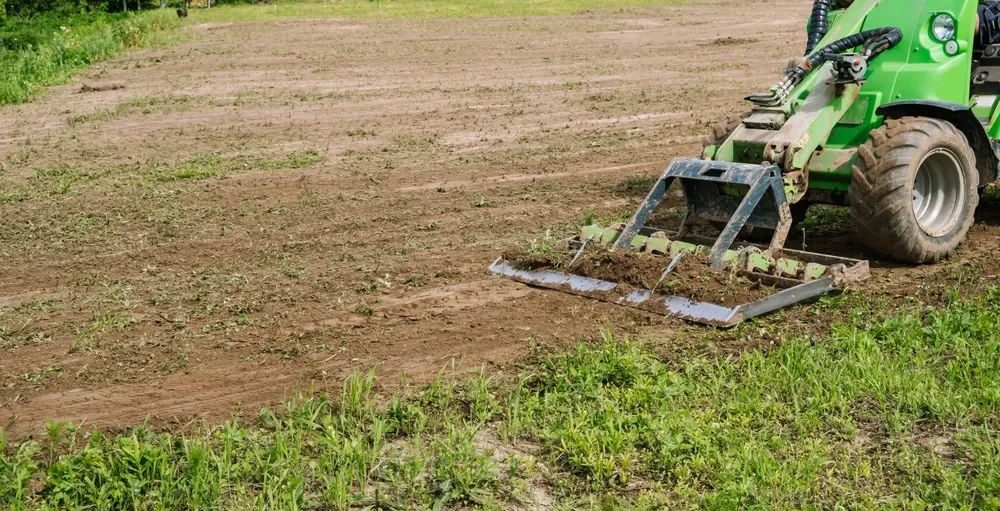
Aeration is another spring essential, especially on Waco’s clay-heavy soils. Clay compacts under foot traffic and rainfall over winter, and without aeration, water and fertilizer struggle to penetrate the root zone. A core aerator pulling plugs from the soil opens things up and gives your lawn a real foundation for the growing season ahead.
Once the lawn is fully green — usually by late April or early May — a balanced, slow-release fertilizer application sets the growth trajectory for the rest of spring. This isn’t a one-size-fits-all formula. Bermuda, St. Augustine, and Zoysia each have different nitrogen needs and respond differently to timing. Applying the wrong product at the wrong stage can set a lawn back rather than push it forward.
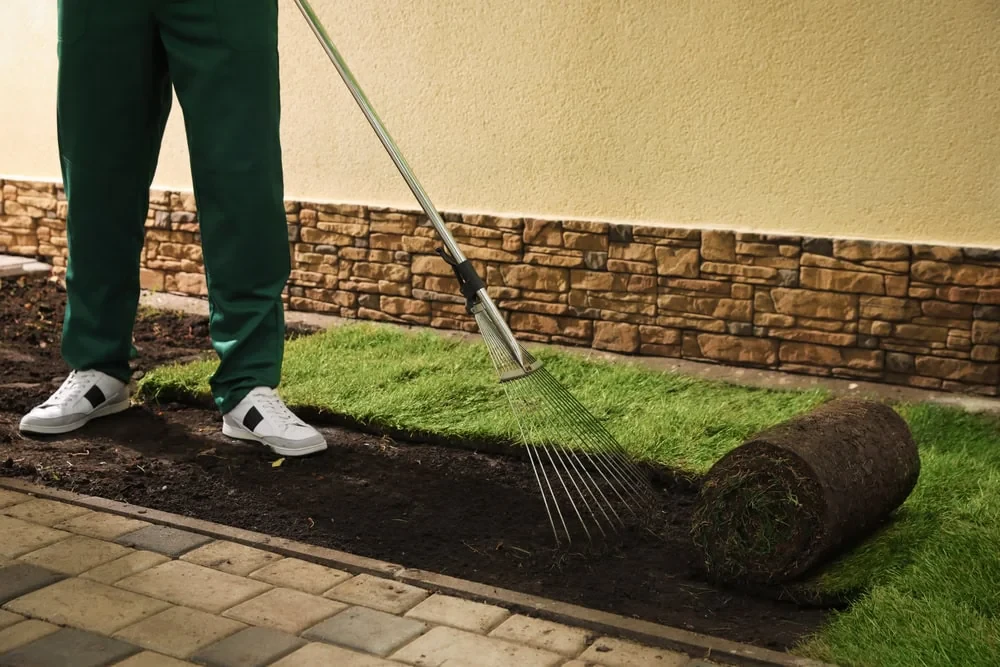
For homeowners across Waco, Bosque County, Falls County, Hill County, and Bell County — whether you’re in Waco proper, out near China Spring, or further into the surrounding areas — spring is also the best window for sod installation, new landscape bed creation, and irrigation system upgrades before summer demand spikes. Getting those projects done in March through May means you’re not competing for availability when everyone else realizes they needed it done two months ago.
Summer in Waco is not subtle. From June through August, temperatures regularly exceed 95°F, and drought periods can stretch for weeks with almost no measurable rainfall. This is when lawns are most vulnerable — and when most lawn care mistakes happen.
The most common one is overwatering. It sounds counterintuitive, but daily shallow watering actually weakens a lawn over time by encouraging shallow root growth. Roots follow water, so if water only penetrates the top inch of soil, that’s where the roots stay — leaving them completely exposed when a heat wave hits. Deep, infrequent watering — roughly three-quarters to one inch, two to three times per week in the early morning — trains roots to grow deeper, where soil stays cooler and moisture lasts longer.
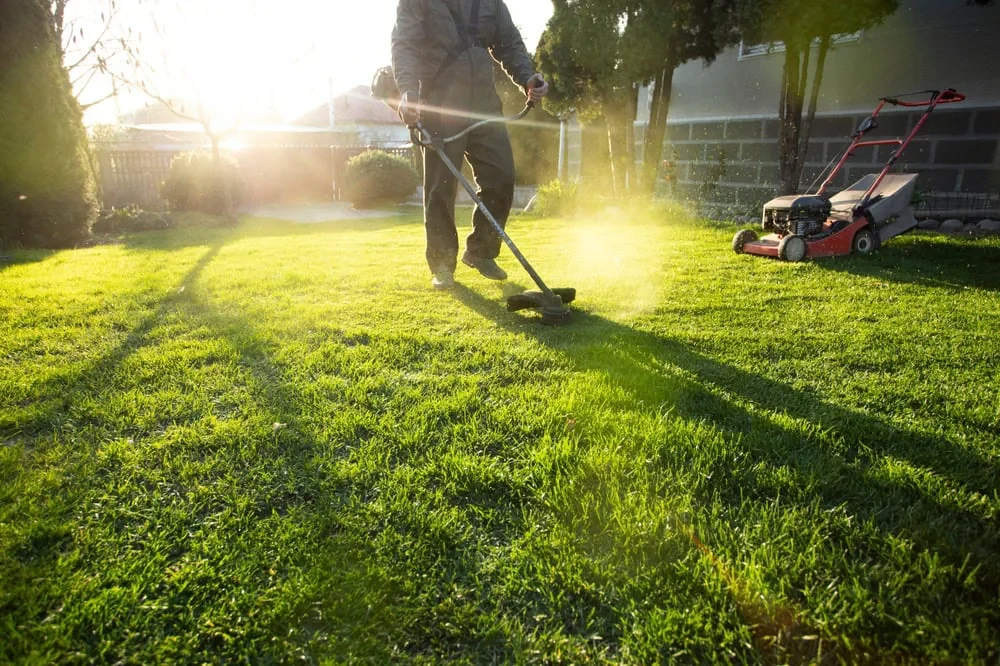
Mowing height matters more in summer than any other season. Cutting Bermuda grass too short during a heat event stresses the plant and exposes the soil to direct sun, which accelerates moisture loss. Raising the mowing height slightly during peak summer keeps the canopy shading the root zone and reduces the overall stress on the plant.
If your Bermuda grass turns brown in July or August, don’t panic. Bermuda goes dormant during extreme heat and drought — it’s a survival mechanism, not a death sentence. The grass is protecting itself by redirecting energy to the root system. A dormant lawn with living crowns and roots will green back up when temperatures drop and rainfall returns. Dead grass, by contrast, pulls up easily with no resistance and shows no green at the base. If you’re not sure which one you’re dealing with, that’s exactly the kind of question worth getting a professional opinion on before you start throwing water or chemicals at it.
For properties with irrigation systems — which is most of the residential and commercial properties we service across McLennan, Bosque, Falls, Hill, and Bell counties — summer is when system reliability becomes critical. A broken sprinkler head or a misaligned zone in July can kill a section of lawn within days. This is also when Texas’s TCEQ licensing requirement for irrigation work matters most. Under Texas law, only a licensed irrigator can legally repair, maintain, or modify an irrigation system. We hold active TCEQ Landscape Irrigator License LI0019027 — which means when we show up to fix your system, we’re doing it legally and correctly.
Want live answers?
Connect with a Huaco Landscape & Irrigation expert for fast, friendly support.
Most homeowners mentally check out of lawn care once summer ends. That’s a mistake. Fall is actually one of the highest-leverage seasons for lawn health — what you do between September and November directly determines how well your lawn survives winter and rebounds the following spring.
The critical window is September and October. A high-potassium fertilizer application during this period strengthens root systems going into dormancy, giving the grass reserves to draw on through winter and energy to green up faster in spring. A pre-emergent herbicide application in October prevents cool-season weeds — annual bluegrass, henbit, chickweed — from taking over during the months when your warm-season grass is dormant and can’t compete.
Winter itself is quieter, but not irrelevant. Bermuda, Zoysia, and St. Augustine all go dormant when temperatures drop, and the brown appearance is normal and expected. Heavy watering and fertilizing during dormancy does more harm than good. But during drought winters — which Central Texas sees more often than not — periodic light watering keeps the root system alive without pushing unnecessary top growth.
Timing questions are the ones we hear most often, and they’re worth answering specifically for this region rather than pointing to a generic national calendar.
For aeration, the primary window in Central Texas is spring — typically late March through April, after the lawn has broken dormancy and is actively growing. This is when the grass can recover quickly from the disruption and take full advantage of the improved soil structure. A secondary fall aeration is possible in September, though the spring application is more impactful on Waco’s clay soils. Aerating during dormancy or during extreme summer heat is counterproductive — the grass can’t recover properly, and you’re just creating stress without the benefit.
Fertilization follows a similar logic. The first application of the year should come after the lawn is fully green — not at the first sign of green-up, but after full emergence, usually late April or early May in Waco and across McLennan County. Applying fertilizer to a lawn that hasn’t fully broken dormancy wastes product and can cause uneven growth. From there, a healthy Bermuda lawn in Central Texas typically benefits from two to four applications through the growing season, spaced roughly six to eight weeks apart, with the last application no later than early September. Fertilizing in late fall or winter when the grass is dormant or heading into dormancy provides no benefit and can actually encourage disease.
For St. Augustine lawns — which are more common in shaded Waco yards — the fertilization schedule is similar but the product selection differs. St. Augustine is more sensitive to certain herbicide combinations and responds better to iron supplementation during periods of yellowing, which is common on Waco’s alkaline clay soils. Applying the wrong product to St. Augustine can cause serious damage, which is one of the reasons a professional assessment of your specific grass type matters before any treatment program starts.
Properties in the outlying counties — particularly Bosque County and Falls County, where soils can vary more than in Waco proper — may have slightly different timing needs depending on elevation, drainage, and microclimate. We factor that in when we’re out there, rather than applying the same schedule regardless of what the property actually shows us.
This is a fair question, and the honest answer is: it depends on what you’re dealing with and what your time and physical capacity actually allow.
The average homeowner spends about 70 hours a year on lawn maintenance. In Central Texas, a significant portion of that happens in temperatures that make outdoor physical work genuinely taxing. For older homeowners — and a large portion of the people we work with across Waco, Belton, Killeen, and the surrounding area fall into this category — that kind of sustained outdoor work isn’t just inconvenient, it’s not realistic. Having a reliable professional handle the mowing, edging, fertilization, and seasonal treatments isn’t a luxury in that context. It’s practical.
Beyond the physical side, there’s the expertise side. Lawn care in Central Texas involves judgment calls that experience makes easier — knowing when brown Bermuda is dormant versus dying, knowing when to hold off on fertilizer during a drought, knowing how to read an irrigation system for inefficiency before it becomes a failure. These aren’t things most homeowners have time to develop, and getting them wrong costs more to fix than a professional service would have cost to begin with.
For irrigation specifically, the question of DIY versus professional isn’t really a matter of preference in Texas — it’s a matter of law. Installing, repairing, or modifying an irrigation system without a TCEQ license is illegal under Texas Occupational Code. Homeowners who hire unlicensed contractors for irrigation work have limited legal recourse if something goes wrong and may face code compliance issues on top of the original problem. This is worth knowing before you accept a low quote from someone who can’t show you a license number.
What we offer isn’t just labor — it’s the local knowledge of what works on Waco’s specific soils and grass types, the licensing to do irrigation work legally, and the availability to actually show up when you need us. Most established providers in the Waco area are booked two to three months out. We respond and get to work within one to two weeks. For a lawn problem in July, that gap matters enormously.
We serve homeowners and commercial clients across McLennan County, Bosque County, Falls County, Hill County, and Bell County — and we’re willing to travel further for the right project. If you’re out in Meridian or Hillsboro or Temple and you’ve had trouble finding someone who’ll come out to your property, that’s exactly the gap we fill.
A healthy lawn in Central Texas isn’t complicated, but it does require the right actions at the right times. Spring preparation sets the growing season up for success. Summer management keeps the lawn alive through the hardest months. Fall treatments build the root strength that carries the grass through winter and fuels the spring rebound. Miss one of those windows, and you spend the next season playing catch-up.
If you’ve been managing your yard without a clear seasonal plan — or if you’ve been waiting on a company that never calls back — it may be time for a different approach. Whether you need ongoing lawn maintenance, an irrigation system inspection before summer, or a full landscape overhaul for a property that’s gotten away from you, there’s a path forward that doesn’t involve months on a waitlist.
Huaco Landscape & Irrigation works with homeowners and commercial clients across Waco, Bosque County, Falls County, Hill County, Bell County, and McLennan County. Reach out and we’ll get back to you — typically within a week or two, not three months from now.
Article details:
Share:
Continue learning: