What every Central Texas homeowner should know before hiring a hardscaping contractor — from soil conditions to red flags to what a fair quote actually looks like.
Share:
Summary:
You’ve probably already noticed that getting a contractor to call you back in Waco is half the battle. The other half is figuring out whether the ones who do show up actually know what they’re doing. Hardscaping is one of those investments where the difference between a good job and a bad one isn’t visible on day one — it shows up two summers later when your patio starts cracking or water starts pooling against your foundation. This guide is here to help you ask the right questions, spot the red flags early, and understand what quality looks like in a market with Central Texas clay soil, triple-digit summers, and contractors who are often booked months out before you ever find them.
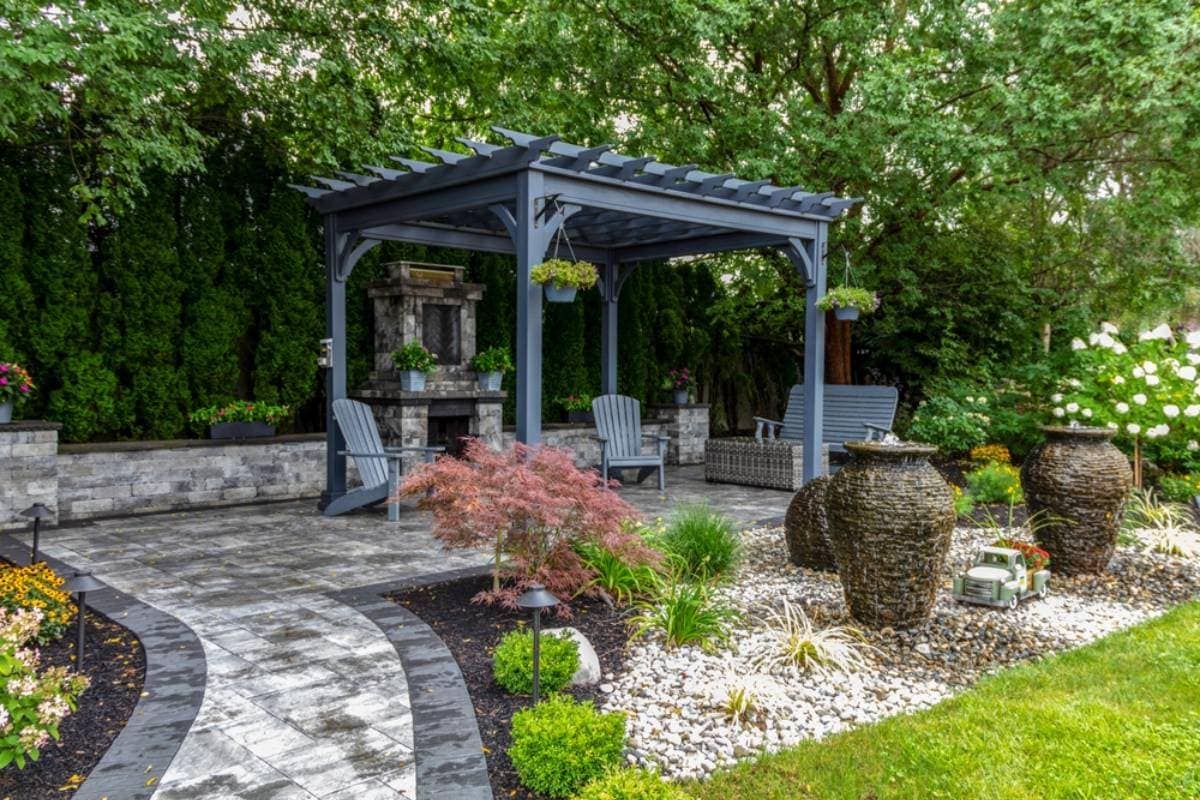
Hardscaping refers to the permanent, structural elements of your outdoor space — patios, walkways, retaining walls, fire pits, outdoor kitchens, steps, and edging. Unlike softscaping, which covers plants, grass, and garden beds, hardscaping is built to stay put. Done well, it becomes the backbone of your entire yard.
In Central Texas, that distinction carries extra weight. The Blackland Prairie clay that runs through McLennan County and into Bosque, Falls, Hill, and Bell County expands when it’s wet and contracts when it dries out. Locals have been calling it “black gumbo” for generations, and for good reason — it moves, and it moves a lot. A hardscaping contractor who doesn’t account for that soil behavior isn’t just cutting corners; they’re setting your project up to fail.
That’s why who you hire matters as much as what you’re building.
Most homeowners focus on the surface — the pattern of the pavers, the color of the stone, the finish on the concrete. That’s understandable. But the work that determines whether your patio lasts five years or fifty happens below ground, where you’ll never see it.
A quality hardscaping contractor excavates to the correct depth, installs a compacted gravel base, and adds a sand or aggregate layer before any surface material goes down. That base is what absorbs the pressure when the soil shifts. Skip it or rush it, and the surface above will eventually tell the story — cracks, sinking corners, or pavers that start to separate.
Drainage is the other piece most homeowners don’t think about until it’s too late. Central Texas clay doesn’t absorb water quickly. When rain hits a poorly graded patio, it has to go somewhere — and if the slope isn’t planned correctly, that somewhere is often toward your house. A good contractor thinks about where the water goes before the first shovel hits the ground.
Retaining walls add another layer of complexity. If you have a sloped yard — common in areas around the Bosque River corridor in Bosque County or on properties near the Brazos in McLennan County — a retaining wall does real structural work. Walls above a certain height need drainage stone behind them to relieve hydrostatic pressure, and taller walls often require geogrid reinforcement. This isn’t optional. A wall built without it can fail, and when it does, it takes everything around it with it.
One more thing worth knowing: interlocking concrete pavers often hold up better than poured concrete slabs in Central Texas conditions. Poured concrete is one solid piece — when the soil moves underneath it, the slab cracks. Pavers, by contrast, can flex slightly with the ground and are far easier to repair. You can pull and replace individual units without redoing the entire surface. That said, both materials have their place, and the right choice depends on your specific site, budget, and how the space will be used.
The contractor market in Waco and the surrounding counties — Bell, Hill, Falls, and Bosque — has the same problem most mid-sized Texas markets do. There are reliable, experienced operators out there, but they’re busy. And when demand outpaces supply, less-qualified contractors fill the gap.
Here’s what to look for before you commit to anyone. First, ask for proof of licensing and insurance. In Texas, irrigation work requires a state-issued license from the Texas Commission on Environmental Quality. Any contractor doing irrigation alongside your hardscaping project should be able to hand you a license number on request. If they hesitate or can’t produce one, that tells you something.
Second, ask for a written, itemized estimate. Not a rough number scribbled on a card — a line-by-line breakdown that tells you what materials are being used, what the base preparation includes, and what the drainage plan looks like. If a contractor gives you a vague bottom-line number with no detail, you have no way to compare it fairly against another quote, and no way to hold them accountable if something gets skipped.
Third, pay attention to how they handle the deposit conversation. A standard deposit in this industry runs around 25 to 33 percent of the total project cost, with progress payments tied to milestones and a final payment on completion. Any contractor asking for full payment upfront before work begins is a red flag. Full stop.
Finally, ask how long they’ve been operating locally. A company that’s been serving Central Texas for over a decade has navigated the soil, the heat, the drought cycles, and the inevitable surprises that come with outdoor construction in this region. That experience isn’t something you can fake, and it’s worth paying for.
Want live answers?
Connect with a Huaco Landscape & Irrigation expert for fast, friendly support.
The short answer is yes — but the longer answer is more useful. Quality hardscaping returns somewhere between 55 and 80 percent of its installation cost in home equity, depending on the project type and materials. A patio alone can return more than 80 percent of what you spend, according to industry research from Angi. Fire pits and outdoor kitchens land in a similar range.
In Waco specifically, that math works in your favor. The city averages around 230 sunny days a year. A covered patio or outdoor living space here gets used nine or ten months out of twelve — which is a very different calculation than making the same investment somewhere with harsh winters and short summers.
Waco sits roughly halfway between Dallas-Fort Worth and Austin on one of the fastest-growing population corridors in the country. Property values in McLennan County have climbed steadily over the past decade, and the broader cultural shift toward home investment has made curb appeal and outdoor aesthetics more relevant here than in comparable markets.
What that means practically is that a well-executed patio, retaining wall, or outdoor living space in Waco isn’t just something you enjoy — it’s something that shows up in your home’s value when it matters.
The climate reinforces the case. July highs average around 96 degrees, which makes a shaded outdoor structure not just a luxury but a functional necessity for anyone who wants to actually use their backyard. A pergola or covered patio extends the usable season significantly. And with water restrictions becoming a recurring reality during drought years — Central Texas homeowners who lived through the 2011 drought know this firsthand — hardscaping that replaces irrigated lawn area reduces your water dependency in a real and measurable way.
For homeowners out in Bosque County, Falls County, or the rural stretches of Hill County, the investment calculus is a little different. Contractors willing to travel to those areas are harder to find, which means when you do find one with the right credentials and a track record of quality work, it’s worth holding onto them. The same project that takes three phone calls to schedule in Waco might take ten in Clifton or Marlin.
**Do I need a permit for a patio or retaining wall in Waco, TX?**
It depends on the scope of the project. Smaller patios typically don’t require a permit, but retaining walls above a certain height — and any structure that affects drainage or requires engineering review — often do. The City of Waco’s building and development services department is the right place to confirm what applies to your specific project. A reputable contractor will know the local requirements and should raise the permit question before work begins, not after. If you’re in Bosque County, Falls County, Hill County, or Bell County, each jurisdiction has its own rules, so this conversation matters even more when you’re working outside Waco proper.
**How long does a hardscaping project take from start to finish?**
A straightforward patio installation in the Waco area might take anywhere from a few days to a couple of weeks, depending on size, materials, and site conditions. More complex projects — retaining walls, outdoor kitchens, multi-area designs — run longer. The bigger variable, honestly, is scheduling. Most established contractors in Central Texas are booked two to three months out during peak season, which runs from late winter through spring. If you’re planning a project for spring or early summer, starting your search in January or February gives you the best chance of landing on a timeline that works.
**What materials hold up best in Central Texas soil and heat?**
Concrete pavers and natural stone both perform well here when installed correctly. Interlocking pavers tend to handle soil movement better than poured slabs because they can flex slightly without cracking — especially important in McLennan County and surrounding areas where clay soil movement is constant. For retaining walls, limestone is a locally sourced option that’s well-suited to the region — it’s durable, handles heat well, and blends naturally with the Central Texas landscape. Whatever material you choose, the base preparation underneath it matters more than the surface itself.
**How do I know if a contractor is actually licensed for irrigation work in Texas?**
Texas requires irrigators to hold a license issued by the Texas Commission on Environmental Quality, or TCEQ. You can verify a license number directly through the TCEQ’s online database. Any contractor offering irrigation installation or repair alongside your hardscaping project should be able to provide their license number without hesitation. We hold TCEQ licenses LI0019027 and BP0021328 — both verifiable on request — and we’re happy to provide documentation upfront.
**Can a hardscaping contractor help with drainage problems, or is that a separate specialty?**
Drainage and hardscaping are closely connected, especially in McLennan County and the surrounding areas where clay soil creates real water management challenges. A contractor who understands hardscape design should be thinking about drainage from the first site visit — how water moves across your property, where it currently pools, and how the finished project will redirect it. If a contractor doesn’t bring up drainage during the estimate conversation, that’s worth asking about directly.
Hiring the right hardscaping contractor in Waco, McLennan County, or the surrounding areas comes down to a few things: local knowledge, verifiable credentials, transparent pricing, and someone who actually shows up when they say they will. Those aren’t high standards — they’re the baseline. The challenge is finding a contractor who clears all of them and can start your project in a reasonable timeframe.
If you’re in Bosque, Falls, Hill, or Bell County and you’ve had trouble getting contractors to even return your calls, that’s a real and common problem in those markets. Distance shouldn’t mean you’re stuck with whoever happens to be available.
We’ve been serving Central Texas since 2010. We’re BBB-accredited, state-licensed for irrigation, and we typically schedule within one to two weeks — not two to three months. If you’re ready to talk through your project, reach out to us directly. We’re happy to take a look at what you’re working with and give you a straight answer on what it would take to get it done right.
Article details:
Share:
Continue learning: