Five practical curb appeal tips from a Waco landscaping company that knows Central Texas soil, heat, and what actually works here.
Share:

Summary:
If your yard has been on your to-do list for longer than you’d like to admit, you’re not alone. Between the heat, the clay soil that cracks like a drought map in July, and the sheer number of contractors who never call back, getting your outdoor space where you want it can feel like more trouble than it’s worth.
But curb appeal isn’t just about appearances. It affects your property value, your comfort, and honestly — how you feel pulling into your own driveway. We’ve put together five tips that are practical, specific to Central Texas conditions, and built around what actually makes a difference here in Waco, McLennan County, and the surrounding region.
Before anything gets planted, trimmed, or installed, the starting point is always the same: understanding what we’re working with. Soil type, drainage patterns, sun exposure, and existing plant health all shape what will work and what will fail within a season.
In McLennan County and across Bosque, Falls, Hill, and Bell Counties, that means accounting for Blackland Prairie clay — the dark, heavy soil that swells when it rains and splits open during a dry stretch. It’s the reason generic landscaping advice from YouTube or a big-box store often falls flat here. What works in sandy Hill Country soil or a Houston suburb doesn’t automatically translate to a Waco yard.
A proper assessment before any work begins isn’t just good practice. It’s the difference between a yard that looks great for one season and one that holds up for years.
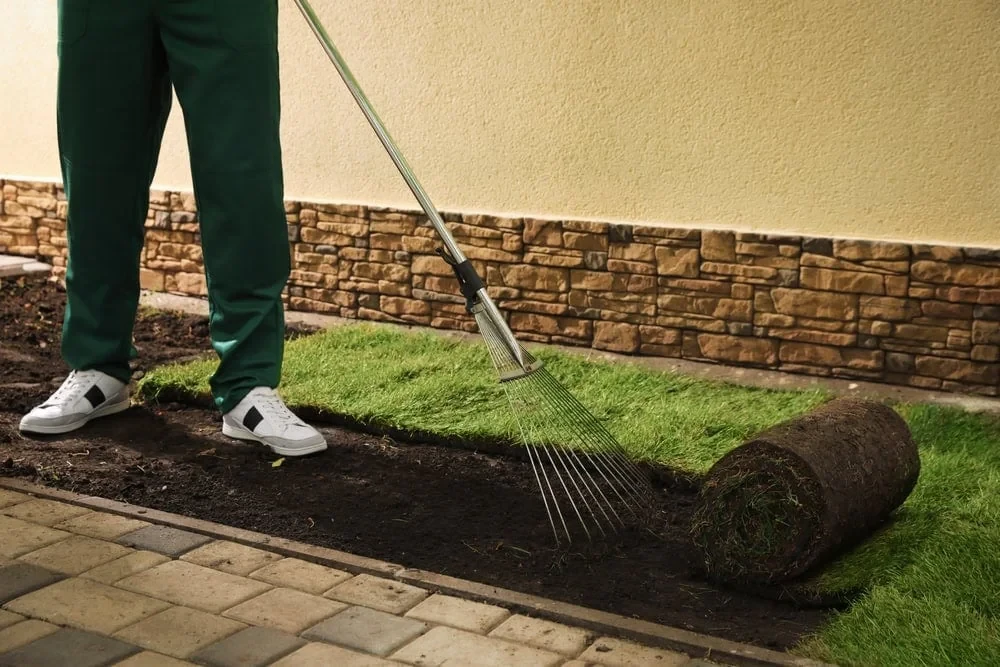
Blackland clay is one of those things that every Central Texas homeowner eventually has a story about. You dig a hole in spring and hit something that feels like wet concrete. You skip a few waterings in August and come back to a yard full of cracks wide enough to lose a garden tool in. It’s not forgiving, but it’s manageable when you work with it instead of against it.
The first thing worth doing is evaluating your drainage. Clay holds water longer than most soils, which sounds like a benefit until you realize it also drowns shallow root systems and creates pooling near foundations. If you’ve noticed standing water after rain or patches of grass that look stressed even when you’re watering regularly, drainage is likely part of the problem — not just the watering schedule.
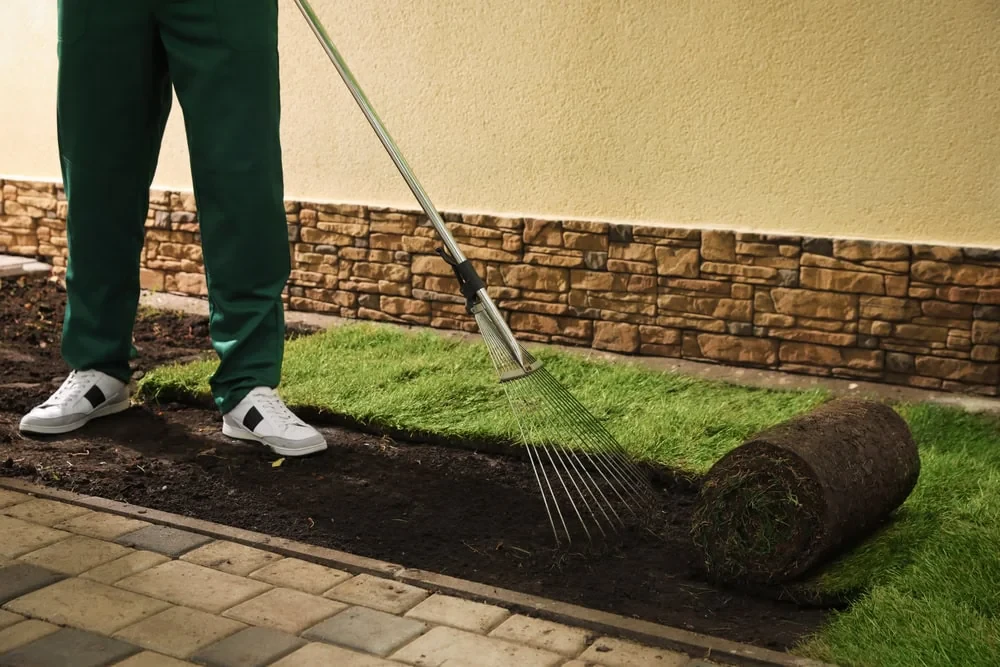
For flower beds and new plantings, soil amendment makes a real difference. Mixing in compost helps break up the density and gives roots room to establish before the summer heat arrives. In Waco and the surrounding counties, that window is shorter than people expect — by May, temperatures are climbing fast, and anything planted without established roots is already fighting an uphill battle.
Mulch is one of the simplest, most effective things we can add to a yard in this region. A two-to-three inch layer over your beds retains moisture, moderates soil temperature, and slows weed growth — all of which matter more here than in cooler climates. It also gives the yard a finished, intentional look that makes a noticeable difference in curb appeal without requiring a major project.
The plants we choose matter just as much as how we care for them. Native and drought-adapted species — things like Texas sage, lantana, or black-eyed Susans — are built for this climate. They require less water, hold up through heat stretches that would stress imported ornamentals, and tend to look their best right when everything else is struggling.
A lawn can look great in April and be a patchy, brown mess by the end of June — and the culprit is almost always irrigation. Either the system isn’t reaching everything it should, the schedule isn’t calibrated for the season, or the system itself has a problem that’s been quietly getting worse since last summer.
In Waco, where July and August regularly push past 95 to 100 degrees, a lawn without consistent, properly distributed water doesn’t stand much of a chance. The heat alone is enough to stress turf in a matter of days. Add in clay soil that can shift and settle over time — sometimes cracking enough to displace sprinkler heads — and you’ve got a situation where a system that worked fine last fall may not be performing the same way this spring.
One of the most overlooked curb appeal fixes is a simple irrigation audit. Walking your yard while the system runs, checking for heads that aren’t rotating, zones that aren’t reaching their edges, or obvious leaks near valve boxes can reveal problems that are easy and inexpensive to fix early but get worse the longer they go unaddressed. After Winter Storm Uri hit Central Texas in February 2021, a significant number of irrigation systems in the Waco area sustained damage that didn’t become obvious until the following spring when systems were turned back on. Some of that damage is still being discovered and repaired years later.
Texas also has specific legal requirements around irrigation work that are worth knowing. The Texas Commission on Environmental Quality — the TCEQ — requires that anyone installing or significantly modifying an irrigation system hold a valid state license. This isn’t a formality. It’s a legal standard that exists because improperly installed systems can waste water, violate local codes, and in some cases create backflow contamination risks. If you’re hiring someone for irrigation work, asking to see their TCEQ license is a completely reasonable and important question. We hold proper licensing and are happy to provide verification.
Want live answers?
Connect with a Huaco Landscape & Irrigation expert for fast, friendly support.
Most people think about curb appeal in terms of plants and grass. But the structural elements of a yard — the edges, the surfaces, the hardscaping — are often what separate a yard that looks maintained from one that looks designed.
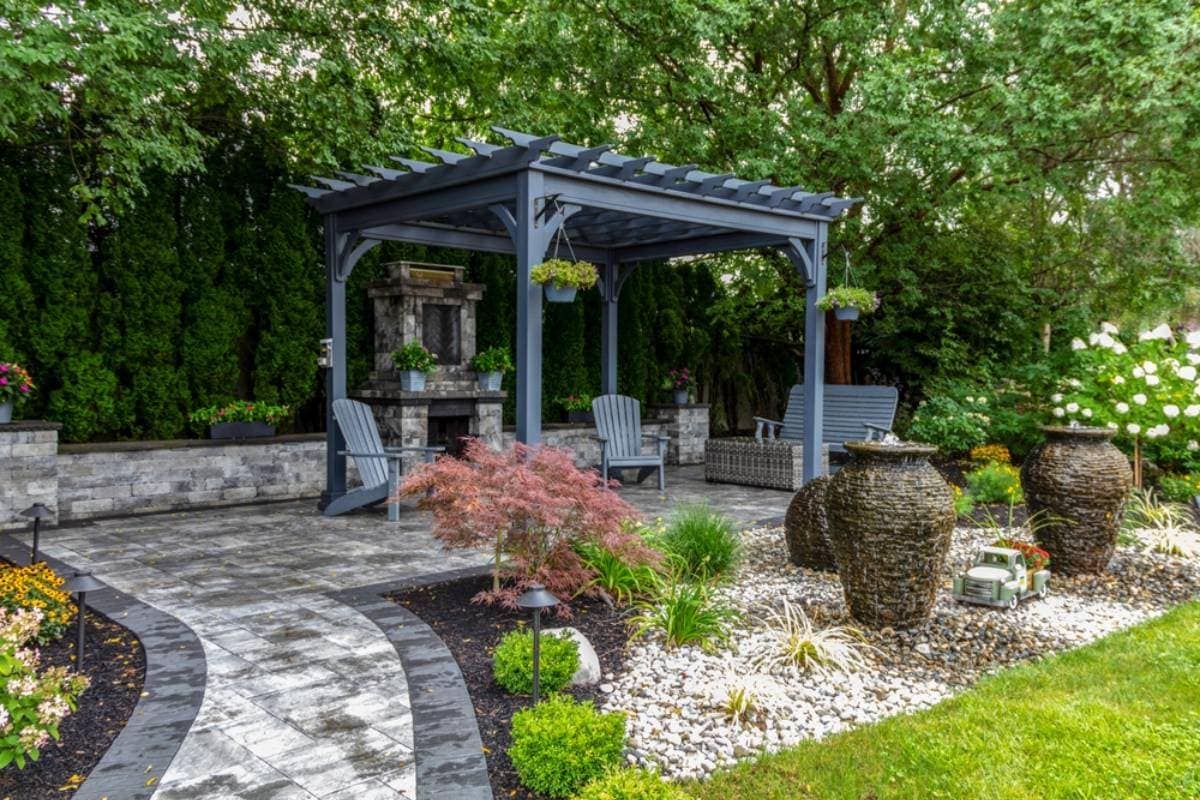
Consistent lawn care services set the foundation. Clean edges along driveways and beds, evenly cut grass, and cleared debris signal that a property is cared for, not just occasionally attended to. From there, hardscaping elements like a stone walkway, a defined patio area, or a retaining wall can completely change how a yard reads from the street — and they do it without requiring ongoing maintenance the way plants do.
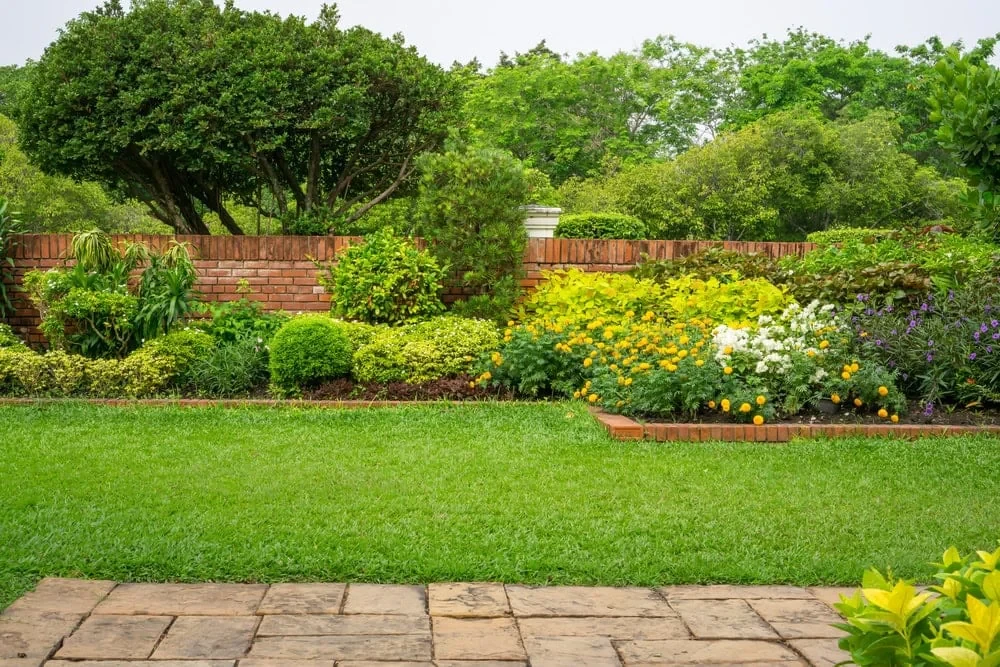
There’s a version of lawn care that’s just mowing — show up, cut the grass, leave. And then there’s the version that actually keeps a yard looking sharp over time. The difference is consistency and attention to detail, and it shows up more clearly than most people expect.
Edging is one of those things that’s easy to skip and immediately noticeable when it hasn’t been done. Clean lines along sidewalks, driveways, and bed borders give a yard a finished quality that mowing alone doesn’t achieve. The same goes for trimming around obstacles — fence posts, tree bases, utility boxes — where a mower can’t reach. When those areas are left unattended, the yard starts to look overgrown even if the main lawn is well-cut.
Fertilization timing matters a lot in Central Texas. The growing season here starts earlier than most of the country — late February can already feel like spring in Waco — and the right fertilization schedule supports healthy turf before the summer stress period hits. Applying the wrong product at the wrong time, or skipping fertilization entirely, leaves grass less equipped to handle the heat and drought conditions that are just a few months away.
For older homeowners or anyone managing a larger property, keeping up with all of this on a regular schedule is genuinely difficult. The physical demands of yard work in Central Texas heat aren’t trivial, and the gap between “I’ll get to it this weekend” and a yard that’s visibly declined can close faster than expected during peak summer. Consistent professional lawn care services aren’t a luxury in this climate — they’re often the most practical way to protect the investment you’ve already made in your property.
In areas like Hewitt, Woodway, China Spring, and throughout Bosque and Hill Counties, where established neighborhoods have mature trees and larger lots, routine maintenance also means managing leaf accumulation, seasonal bed cleanup, and adjusting care schedules as conditions change. That kind of attentiveness is what keeps a yard looking its best year-round, not just after a one-time cleanup.
Hardscaping is one of the highest-return investments you can make in a yard, and it’s often underestimated because people associate curb appeal almost entirely with plants and grass. But a well-placed patio, a stone walkway from the driveway to the front door, or a retaining wall that solves a drainage problem while adding visual structure — these are the elements that make a yard look like it was actually planned, not just maintained.
In Central Texas, hardscaping also has a practical advantage that’s easy to overlook: it doesn’t need water. During drought restrictions, when outdoor watering is limited or suspended, hardscaped areas continue to look exactly the same. For properties in Bosque County, Falls County, or rural parts of Hill County where water access and conservation are ongoing concerns, that durability has real value.
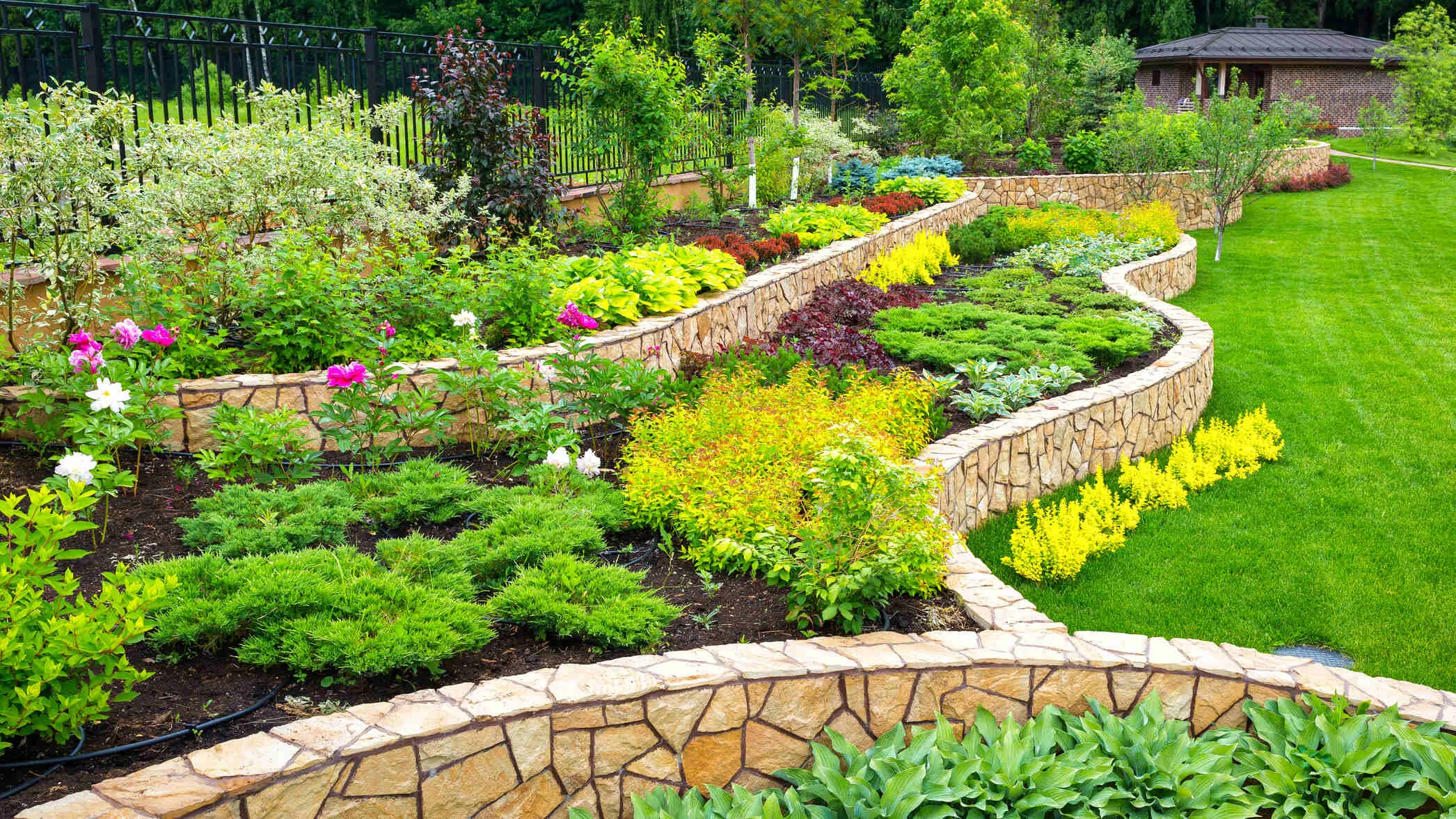
Retaining walls deserve particular attention in the Waco area and throughout McLennan County. The combination of Blackland clay’s expansion and contraction with the region’s occasional heavy rains creates erosion and grade issues on many properties — especially those with any slope. A properly built retaining wall addresses the structural problem while also adding definition and visual interest to the yard. Done right, it’s one of those improvements that looks intentional and holds up for decades. Done wrong — by someone without experience in local soil behavior — it can shift, crack, or fail within a few years.
For properties in Bell County, particularly around Temple and Belton where new construction has been expanding steadily, hardscaping is often part of a larger project that includes irrigation installation for a new site. That combination — irrigation infrastructure and outdoor structural elements installed together from the start — is far more efficient than adding them separately over time. We work with construction companies in the area on exactly this kind of project, and the process is smoother when both elements are coordinated from the beginning.
One thing worth knowing: before any hardscaping project begins, a thorough site evaluation is essential. Grade, drainage, soil composition, and proximity to existing utilities all affect design decisions in ways that aren’t always visible from the surface. Skipping that step is how projects end up looking fine for a season and then developing problems that cost more to fix than the original work did.
Curb appeal in Central Texas isn’t complicated, but it does require the right approach for this specific region. Clay soil, extreme summer heat, periodic drought, and the occasional hard freeze all shape what works here — and what doesn’t. The five areas covered in this post — soil and drainage, irrigation, consistent lawn care, and hardscaping — are where most yards in Waco, McLennan County, Bosque County, Falls County, Hill County, and Bell County have the most room to improve.
Whether you’re in town or out in the surrounding counties, the fundamentals are the same: start with an honest look at what your yard actually needs, address the structural and irrigation issues before focusing on aesthetics, and work with someone who knows this region’s conditions well enough to give you advice that holds up past the first season.
If you’re ready to move forward — or just want to know what your yard actually needs — we’re here. We respond and get to work within one to two weeks, we serve the full Central Texas region, and we’ll give you a straight answer and an upfront quote before any work begins.
Article details:
Share:
Continue learning: