Sustainable outdoor living is reshaping how Central Texas homeowners think about their yards — and 2026 is bringing some of the most practical, climate-smart hardscaping design yet.
Share:
Summary:
Spend one August in Waco and you’ll understand why outdoor spaces here need to be built differently than anywhere else. The heat is relentless. The clay soil shifts. When it finally rains, it really rains — and poorly planned hardscaping turns into a drainage disaster fast. So when the industry starts talking about sustainable outdoor living as the defining trend of 2026, it’s not news to anyone who’s been working Central Texas yards for a while. It’s just the rest of the country catching up. This page walks you through what these trends actually look like, why they make sense for this specific region, and what to look for in a hardscaping contractor before you commit to anything.
The word “sustainable” gets thrown around a lot, but in the context of hardscaping, it has a pretty specific meaning. It refers to outdoor design that works with your environment instead of against it — materials that manage water rather than redirect it, surfaces that hold up under extreme temperature swings, and layouts that reduce long-term maintenance without sacrificing the way a space looks and feels.
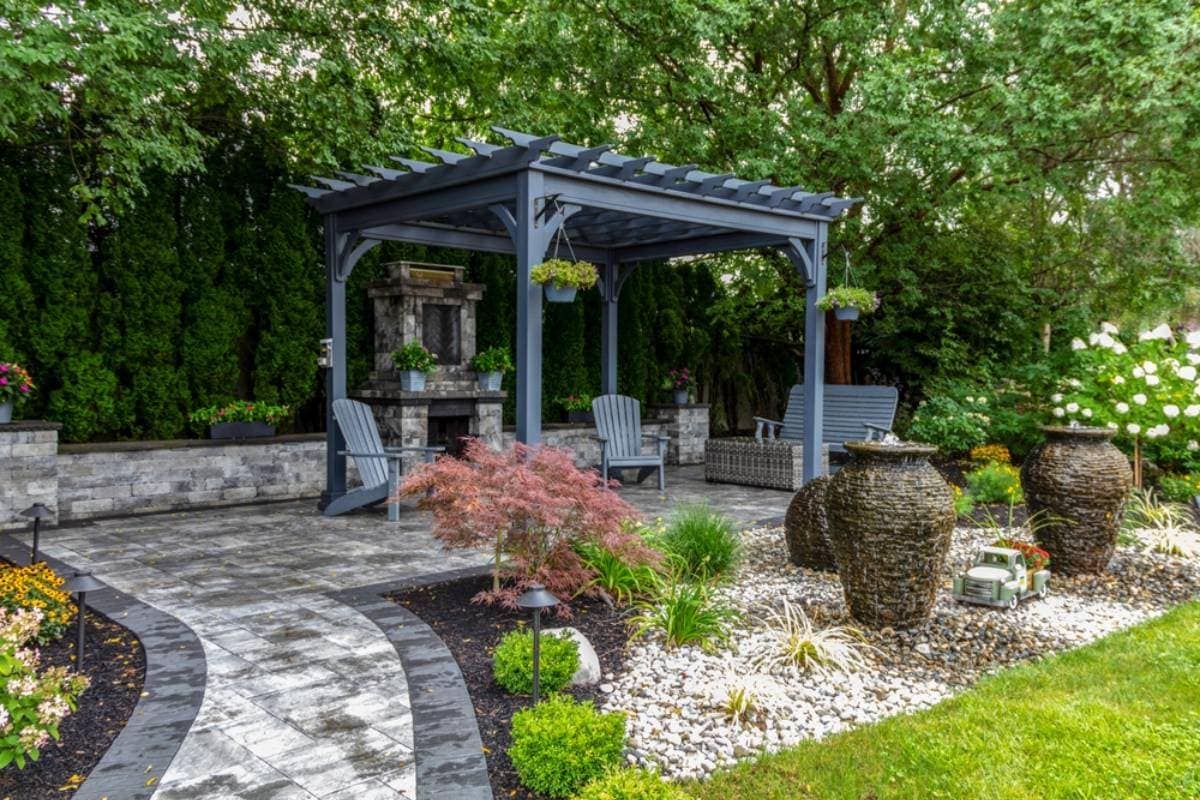
For 2026, the trends that are gaining the most traction include permeable pavers, mixed-material patios using natural stone and concrete, integrated planting beds, outdoor kitchens built for year-round use, and fire features that extend the season. These aren’t just aesthetic choices. In a region like Central Texas — where drought and flash flooding can happen in the same month — they’re practical ones.
If you’ve lived in McLennan County or the surrounding areas for any length of time, you already know what the soil does. That dark, expansive clay swells when it’s wet and contracts when it dries out. Traditional hardscaping that doesn’t account for this ends up cracking, heaving, or settling unevenly within a few years. It’s one of the most common reasons homeowners end up calling us to redo work that was done wrong the first time.
Permeable pavers address this in a few ways. Because they allow water to pass through rather than pool on top, they reduce the hydraulic pressure that builds up underneath a surface during heavy rain. The Waco area sits in the Middle Brazos-Lake Whitney watershed, which has seen some level of drought in roughly 66% of weeks since 2000 — and then intense rainfall events that the ground simply can’t absorb fast enough. Permeable hardscaping is designed for exactly that pattern. It slows runoff, protects soil from erosion, and reduces the kind of flooding that catches homeowners off guard after a dry stretch.
Beyond drainage, permeable pavers are also a smart choice from a water conservation standpoint. Waco periodically implements outdoor watering restrictions when Lake Waco — the city’s primary water supply — drops under drought stress. A yard that’s designed to capture and use rainfall efficiently is a yard that doesn’t depend on a sprinkler system to stay intact. That’s not a small thing when you’re watching your water bill in July or navigating a Stage 2 restriction.
From a design standpoint, permeable pavers have come a long way. The options available in 2026 range from clean, modern concrete units to tumbled natural stone that fits a more traditional or farmhouse-style aesthetic — the kind of look that’s become a real point of pride for a lot of Waco homeowners over the past decade. You don’t have to choose between function and appearance. The best installations deliver both.
Outdoor kitchens, covered patios, and fire features are showing up on nearly every 2026 trend list — and they’re genuinely popular for a reason. Waco has roughly nine months of outdoor-friendly weather. A well-designed outdoor living space lets you use that time. A poorly designed one sits unused because it’s too hot in the afternoon, too exposed to the wind, or built with materials that absorb heat and make the whole area uncomfortable by noon.
The difference usually comes down to whether the contractor actually knows the local conditions. A patio with the wrong orientation bakes in the afternoon sun. An outdoor kitchen without proper shade or ventilation is unusable from June through September. Fire features that aren’t positioned with Waco’s wind patterns in mind become a nuisance instead of an asset. These aren’t problems you’ll read about in a design magazine, but they’re problems that show up in real yards across McLennan, Bell, and Hill counties every year.
What the 2026 trend toward sustainable outdoor living gets right is the emphasis on function alongside aesthetics. Biophilic elements — meaning design that integrates natural materials and plantings rather than treating hardscaping and landscaping as separate things — are gaining ground because they actually make spaces more comfortable and more usable. A pergola with integrated climbing plants provides shade that a bare structure doesn’t. A retaining wall with a planting pocket breaks up the visual weight and reduces heat absorption. These details matter in a climate where summer temperatures regularly hit the mid-to-upper 90s.
For homeowners in Bosque County, Falls County, and the rural stretches of Hill County, access to contractors who think at this level of detail has historically been limited. Most professional hardscaping companies don’t travel far outside the city. That leaves a lot of property owners — many of them on larger lots with real potential — working with whoever is available rather than whoever is actually good. We work across this entire region, and we’ve seen firsthand how much difference the right approach makes.
Want live answers?
Connect with a Huaco Landscape & Irrigation expert for fast, friendly support.
The Waco market has a real availability problem. Most established contractors are booked two to three months out, which means a lot of homeowners either wait indefinitely or settle for whoever can show up soonest — not necessarily whoever does the best work. It’s a frustrating position to be in, especially when you have a project that’s time-sensitive or a yard that’s been neglected longer than you’d like.
Knowing what to look for before you start calling around saves time and protects you from making an expensive mistake. Hardscaping is not a small investment, and unlike a paint job, it’s not easy to undo.
Licensing matters more than most people realize. In Texas, installing or repairing an irrigation system requires a state license through the Texas Commission on Environmental Quality. Not every landscape company has one. Hiring an unlicensed contractor for irrigation work puts you in a difficult spot if something goes wrong — there’s no legal protection, no warranty recourse, and potentially no insurance coverage. It’s worth asking directly before you sign anything.
Beyond licensing, look for a contractor who can show you completed local work. Portfolio photos from projects in Waco, Belton, or the surrounding counties tell you something that generic stock imagery doesn’t — that the company has actually worked with Central Texas soil conditions, navigated local drainage challenges, and delivered results that hold up over time. If a contractor can’t show you their work, that’s a meaningful data point.
BBB accreditation is another signal worth paying attention to. It’s not just a logo. Maintaining accreditation requires a track record of honest business practices, transparent communication, and responsiveness if something goes wrong. It’s the kind of third-party verification that matters when you’re handing over a deposit to someone you’ve never worked with before.
Transparent pricing is non-negotiable. The final invoice should reflect the quote you were given at the start. If a contractor is vague about costs, hedges on what’s included, or pushes for a large upfront payment before any work begins, those are warning signs. A professional operation gives you a clear, written quote and sticks to it.
Finally, pay attention to how quickly they respond when you first reach out. A contractor who takes two weeks to return a call is showing you exactly how they’ll communicate once your project is underway. In a market where responsiveness is genuinely rare, the companies that prioritize it stand out fast.
A well-run hardscaping project doesn’t start with a shovel. It starts with a real conversation about what you’re trying to accomplish — how you use your outdoor space, what’s not working about it right now, and what a finished result actually looks like for your property. For older homeowners who want a yard they can enjoy without the physical upkeep, that conversation sounds different than it does for a commercial property manager who needs an irrigation system installed on a new construction site before the landscaping crew arrives.
Both are legitimate needs. Both deserve a contractor who listens before they start talking about materials.
Once the scope is clear, we walk you through the design before any work begins. 3D design previews have become a standard part of our process for this reason — they let you see what your space will look like before you’ve committed to anything permanent. That’s especially valuable for larger investments like full outdoor living spaces, retaining walls, or integrated hardscaping and irrigation systems where the details really matter.
Sub-base preparation is where a lot of projects succeed or fail, and it’s something you’ll rarely see discussed in a sales conversation. In Waco’s clay soil, proper sub-base work is what determines whether your patio looks the same in five years as it does on installation day — or whether you’re calling someone to fix it. A contractor who skips this step to save time or cut costs is making a decision that you’ll pay for later.
For commercial clients — particularly construction companies managing new development sites across Bell County or along the I-35 corridor between Waco and Austin — the priority is usually reliability and coordination. Irrigation systems need to go in on schedule so the rest of the site work can proceed. A contractor who shows up when they say they will and communicates clearly throughout the project is worth more than a slightly lower bid from someone who disappears between visits.
The 2026 trends in sustainable hardscaping aren’t complicated once you strip away the industry language. They’re about building outdoor spaces that work in the actual climate where you live — that handle the heat, manage the water, and last long enough to justify the investment. In Central Texas, that’s not a trend. It’s just good practice.
What makes the difference is finding a hardscaping contractor who understands this region specifically — the soil, the weather patterns, the drainage challenges — and who can actually show up within a reasonable timeframe. That combination is harder to find than it should be in the Waco market.
We’ve been working in this area since 2010. We’re based here, we know these yards across McLennan, Bell, Bosque, Falls, and Hill counties, and we’re typically able to respond and get started within one to two weeks — not the two to three months you’ll hear from most other companies. If you’re ready to move forward on a hardscaping project, reach out to us and let’s talk about what makes sense for your property.
Article details:
Share:
Continue learning: