Waco summers test every lawn. These five straightforward tips help your grass survive the heat without turning your weekends into constant yard work.
Share:
Summary:
Your lawn looked great in April. Now it’s July, the temperature hasn’t dropped below 90 in two weeks, and those brown patches are spreading faster than you can water them. Sound familiar? Waco summers are brutal on grass, but you don’t need a degree in horticulture to keep your yard looking decent. You just need to understand what your lawn actually needs when the heat hits. These five tips won’t take over your life, but they will make a real difference between a lawn that survives summer and one that thrives through it.
Most people water their lawns wrong. They run the sprinklers every day for 15 minutes and wonder why the grass still looks stressed. Here’s what’s actually happening: shallow, frequent watering trains your grass roots to stay near the surface, where they’re vulnerable to heat and drought.
Your lawn needs deep watering, not daily misting. Think of it like this—you want the water to soak down four to six inches into the soil, encouraging roots to grow deeper where moisture stays longer. Two to three deep watering sessions per week beats seven shallow ones every time.
Timing matters just as much as depth. Water between 6 and 10 in the morning, before the Texas sun turns your yard into a skillet. Early watering gives grass time to absorb moisture before heat causes evaporation. Evening watering might seem convenient, but wet grass sitting overnight invites fungal diseases that spread fast in Waco’s humidity.
Bermuda grass dominates Waco lawns for good reason—it handles heat better than most varieties. But even Bermuda has limits when you’re getting less than half an inch of rain all month.
Your Bermuda lawn needs about one inch of water per week during summer. That’s total water, including any rain you actually get. You can measure this with empty tuna cans placed around your yard. Run your sprinklers and time how long it takes to fill the can with one inch of water. That’s your baseline.
Split that inch across two or three watering sessions rather than dumping it all at once. Monday and Thursday mornings work well for most people. If we hit a stretch above 100 degrees or you notice the grass looking grayish-blue instead of green, add a third session mid-week.
St. Augustine grass, which some Waco homeowners prefer for shadier spots, needs roughly the same amount but shows stress faster. You’ll see it in the way the blades fold or fail to spring back when you walk across them. That’s your lawn telling you it needs water soon, not tomorrow.
Clay soil—which most of us deal with in Central Texas—complicates things because it drains slowly. If you see runoff or puddles forming, you’re watering too fast. Split your watering time into two shorter cycles with a 30-minute break between them. First cycle softens the soil, second cycle actually penetrates deep.
Watch for signs you’re overwatering too. Mushrooms popping up, constantly squishy soil, or a lawn that looks pale green instead of vibrant all suggest you’re drowning your grass. Pull back slightly and let the soil dry between sessions. Your grass roots need oxygen just as much as they need water.
You’ve probably seen neighbors watering at noon or running sprinklers at 8 PM. Both waste water and create problems. The best time to water your Waco lawn is early morning, specifically between 6 and 10 AM.
Early morning watering works because temperatures are cooler, wind is calmer, and evaporation is minimal. Your grass has the entire day to dry before nightfall, which matters more than you might think. Grass that stays wet overnight becomes a breeding ground for fungal diseases like brown patch, which spreads quickly in our humid Central Texas climate.
Watering at midday seems logical when the sun is strongest, but you’re losing 30 to 50 percent of that water to evaporation before it even reaches the roots. You’re essentially watering the air. That’s money and water down the drain during a time when Waco often has watering restrictions in place.
Evening watering after work feels convenient, but it’s the worst option for lawn health. Grass blades stay wet for 12 to 15 hours overnight, creating perfect conditions for disease. You might save water compared to midday watering, but you’ll spend more fighting fungal infections and dead patches.
If early morning watering doesn’t fit your schedule, invest in a timer for your sprinkler system. A basic timer costs less than treating one round of lawn disease, and it ensures your grass gets watered at the right time whether you’re home or not. Most irrigation systems can be programmed to run automatically, taking the guesswork and schedule conflicts out of the equation.
Some Waco neighborhoods have specific watering days based on your address—typically odd addresses on certain days, even addresses on others. Check with your local water utility before setting your schedule. Following these restrictions isn’t just about avoiding fines; it helps maintain water pressure and supply for everyone during our driest months.
Want live answers?
Connect with a Huaco Landscape & Irrigation expert for fast, friendly support.
The height you cut your grass directly affects how well it survives summer. Cut too short and you’re exposing soil to direct sun, increasing evaporation and stressing the roots. Leave it too long and you risk matting, which blocks air and light from reaching the base of the grass.
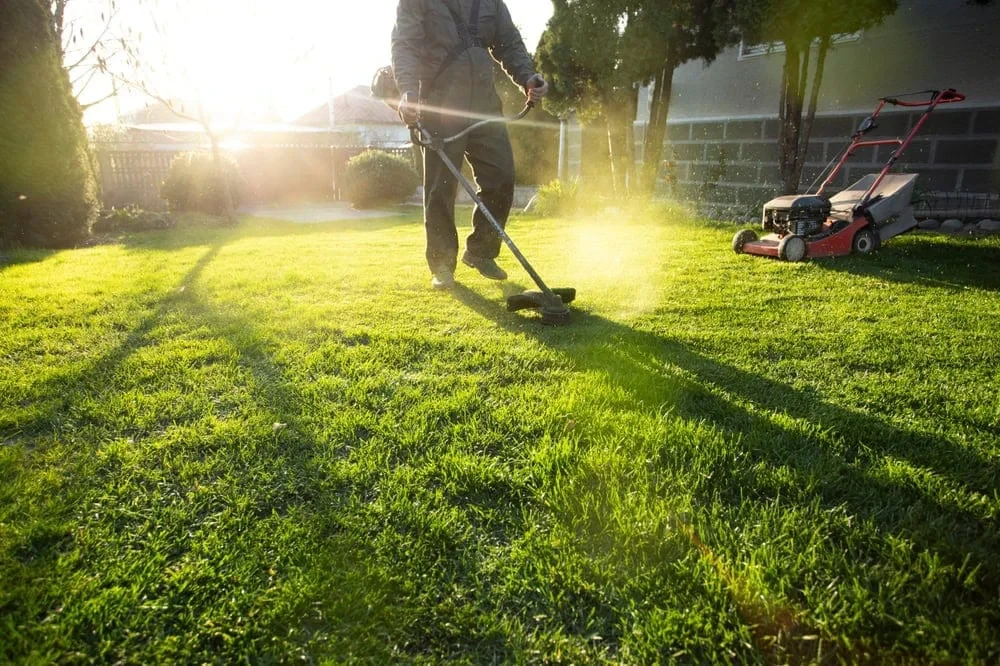
For Bermuda grass, set your mower between 1.5 and 2.5 inches during summer. For St. Augustine, go higher—2.5 to 4 inches works better. Taller grass shades the soil, keeps it cooler, and helps retain moisture where your lawn needs it most.
Never remove more than one-third of the grass blade in a single mowing. If your grass gets away from you and grows too tall, lower it gradually over several mowing sessions spaced three to five days apart. Cutting too much at once shocks the grass and weakens it right when it needs strength to handle heat.
Mowing frequency depends on how fast your grass grows, and summer heat actually slows growth for most Waco lawns. During peak heat in July and August, most Bermuda and St. Augustine lawns need mowing once a week. Some weeks you might stretch it to every five days if we get unexpected rain that triggers growth.
The one-third rule guides your schedule more than the calendar does. If your grass hasn’t grown enough that you’d be removing more than a third of the blade height, you can wait another few days. Mowing too frequently when growth has slowed stresses the grass unnecessarily and wastes your time.
Sharp mower blades make a bigger difference than most people realize. Dull blades tear grass instead of cutting it cleanly, leaving ragged edges that turn brown and make your lawn more susceptible to disease and pests. Sharpen your mower blade at least twice during the growing season, or more often if you’re mowing a large area.
Mow in the late afternoon or early evening when temperatures drop slightly. Mowing in the midday heat stresses both you and your grass. The grass is already working hard to survive the heat; adding the trauma of mowing during peak sun makes recovery harder.
Change your mowing pattern each time you cut. Mowing the same direction every week creates ruts and compacts soil in wheel tracks. Alternating between horizontal, vertical, and diagonal patterns helps grass grow more upright and keeps your lawn looking fuller and healthier.
Leave grass clippings on the lawn unless they’re clumped or excessively long. Clippings decompose quickly and return valuable nutrients to the soil—it’s free fertilizer. This practice, called grasscycling, can provide up to 25 percent of your lawn’s nitrogen needs throughout the season.
Brown grass in Waco summer usually points to one of three problems: not enough water, cutting too short, or pest damage. Sometimes it’s all three working together.
Heat stress shows up as grass that looks grayish or bluish-green before turning brown. The blades fold in on themselves or lie flat instead of standing upright. If you walk across heat-stressed grass, your footprints stay visible instead of bouncing back. This is your lawn’s way of conserving water, and it needs irrigation soon.
Drought stress looks similar but progresses faster. Grass turns brown in irregular patches, starting with the highest points in your yard or areas with poor soil. If brown patches don’t green up within three to four days of deep watering, you’re likely dealing with something beyond simple drought.
Chinch bugs are common culprits in Waco lawns, especially in St. Augustine grass. These tiny black insects with white wings feed on grass blades and inject toxins that cause irregular brown patches. Unlike drought stress, chinch bug damage doesn’t respond to watering. Get down close and part the grass at the edge of a brown patch—if you see small black bugs scurrying around, that’s your problem.
Grubs are another possibility. These white, C-shaped larvae feed on grass roots below the soil surface. Brown patches from grub damage feel spongy when you walk on them, and you can often peel back the affected turf like a carpet because the roots are gone. Check by digging up a small square of brown grass and counting the grubs in the soil. More than five or six per square foot means you need treatment.
Fungal diseases like brown patch create circular brown areas with a darker ring around the edge. These spread quickly in hot, humid conditions, especially if you’re watering in the evening or cutting grass too short. Fungal problems require specific fungicides and changes to your watering and mowing practices.
Sometimes brown grass is just dormancy—Bermuda grass can go dormant during extreme heat and drought as a survival mechanism. Dormant grass looks dead but isn’t. It’ll green up again when conditions improve. The difference is that truly dead grass pulls up easily and has no green at the base of the blades, while dormant grass still has live crowns and roots.
A healthy summer lawn in Waco comes down to consistent watering, proper mowing height, and catching problems early. Water deeply two to three times per week in the early morning. Keep your mower blade sharp and set at the right height for your grass type. Watch for signs of stress, pests, or disease before small issues become big problems.
You don’t need to spend every weekend maintaining your lawn, but you do need a routine that works with Waco’s climate instead of fighting against it. The grass varieties that thrive here—Bermuda, St. Augustine, Zoysia—can handle brutal heat when they’re cared for properly.
If lawn maintenance is taking up too much of your time, or if you’re dealing with irrigation issues that keep coming back, we can help. We’ve been working with Waco lawns since 2010 and understand exactly what Central Texas grass needs to stay healthy through summer.
Article details:
Share:
Continue learning: